The 10-Minute Walk That Blasts Perimenopause Weight Loss
Right, picture this. It’s 7:30pm. Dinner is done. The dishwasher is on. And I’m sitting on the sofa feeling pleasantly full, scrolling through nothing in particular and telling myself I’ll “be more active tomorrow.”
That was me, before I discovered that the most powerful thing I could do for my perimenopause weight loss had nothing to do with spin class, HIIT, or punishing myself with a 6am gym alarm.
It was a walk. Ten minutes. After dinner.
I know. Stay with me.
Because when I tell you the science behind this is actually wild, I mean it. And when I tell you I noticed a difference in my energy, my sleep, and yes, the belly situation, within a couple of weeks of doing it consistently, I’m not exaggerating for content. (That’s me saying something, given how much I resisted believing something so simple could work. 😂)
Why the Gym Can Actually Work Against You in Perimenopause
Here’s the thing nobody really says out loud: in perimenopause, more exercise is not always better. In fact, it can make things actively worse.
When oestrogen starts to decline, your body becomes significantly more sensitive to cortisol, your main stress hormone. And what does intense, prolonged exercise do? It raises cortisol. A lot.
So that 60-minute cardio session you’ve been dragging yourself to? If your body is already in a low-grade stress response (hello, midlife juggle, broken sleep, that underlying “everything is slightly too much” feeling), you might be adding fuel to a fire that’s already burning.
High cortisol in perimenopause tells your body to hold onto fat, especially around the middle. It disrupts sleep. It cranks up cravings. And it makes you feel wired-but-tired in a way that’s genuinely miserable.
Isn’t it mad how we spend decades being told to exercise harder, and then hit perimenopause and wonder why nothing’s working? Your body didn’t break. The rules changed.
Enter: The Post-Meal Walk
A short walk after eating, particularly after your biggest meals, is one of the most well-researched and underrated tools for blood sugar balance. And blood sugar balance, if you haven’t already heard me bang on about it, is absolutely central to weight management, energy, sleep, and mood in perimenopause.
Here’s what actually happens in your body when you walk after eating:
- Your muscles use glucose directly for movement, so less of it ends up spiking your blood sugar.
- Lower blood sugar spikes mean lower insulin. Lower insulin means your body is far less likely to store that meal as fat.
- You avoid the post-meal energy crash that sends you reaching for something sweet an hour later.
- Gentle movement activates your parasympathetic nervous system (rest-and-digest mode), which is the opposite of the fight-or-flight cortisol state your body is probably spending too much time in.
A 2022 study in Sports Medicine found that even a 2–5 minute walk after meals had a meaningful effect on blood sugar. Ten minutes has been shown to lower post-meal glucose spikes comparably to some medications.
For women in perimenopause specifically, whose insulin sensitivity is already shifting because of falling oestrogen, this is not a small thing. This is a genuinely meaningful tool.
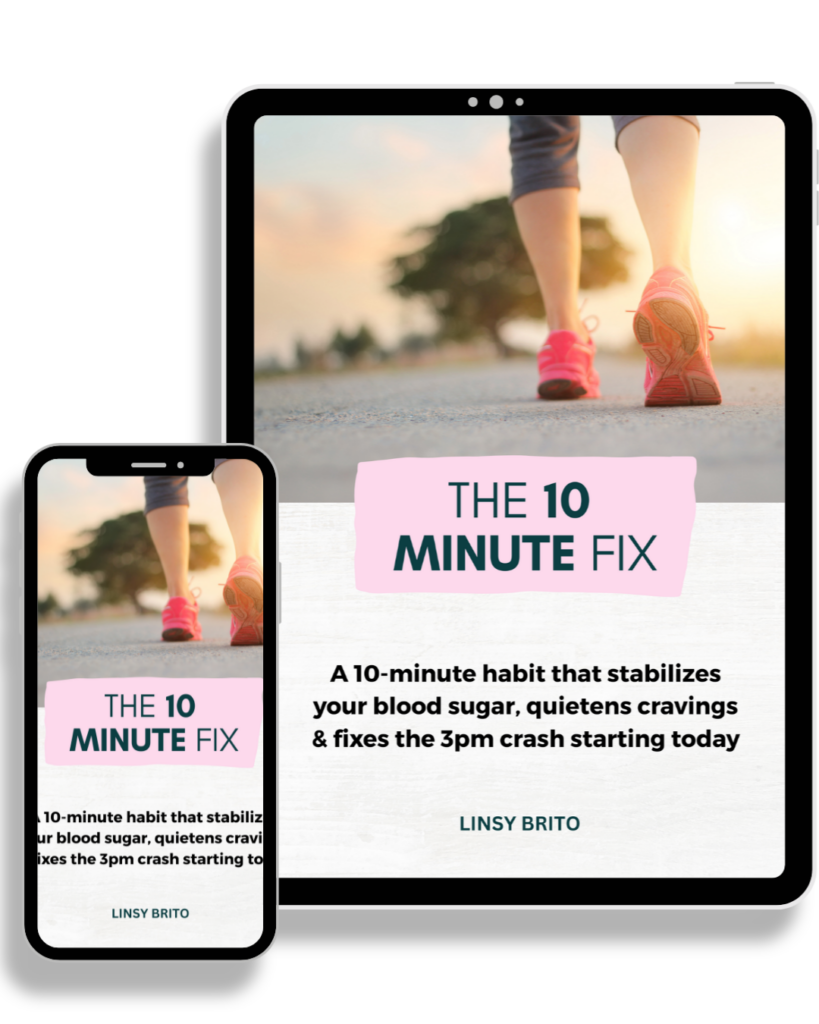
Grab The 10-Minute Fix Free Walking Guide
I built this guide specifically for midlife women who want to move in a way that works with their hormones, not against them. It covers when to walk, how to build the habit, and why this approach is different to everything else you’ve tried.Comment WALK below or grab it free at linsybrito.com→
But Doesn’t 10 Minutes Feel… Pointless?
Do you know what, I thought so too. I genuinely thought that if I wasn’t coming home sweaty and slightly regretting my life choices, I wasn’t doing enough.
But here’s the shift: the goal of a post-meal walk isn’t fitness. It’s blood sugar management and nervous system regulation. These are completely different things, and they require completely different kinds of movement.
You’re not trying to burn calories. You’re telling your body: “we’re safe, we can digest, we don’t need to store this.”
That’s a fundamentally different relationship with exercise. And honestly? One that felt a lot more sustainable to me when I was already exhausted from everything else.
Living abroad, managing a health condition that flares when I overdo things (sarcoidosis, which involves chronic inflammation, so cortisol is not my friend), and trying to keep a family functioning meant I genuinely could not do punishing workouts without paying for it. The post-meal walk became my non-negotiable because it was achievable, not despite it.
How to Actually Do This
It’s not complicated, which is kind of the point.
- Aim for 10 minutes after your two main meals. Lunch and dinner tend to create the biggest glucose spikes.
- Gentle pace. This isn’t power walking. Conversational pace is perfect.
- Aim for within 30–60 minutes of finishing eating. The sooner the better for blood sugar impact.
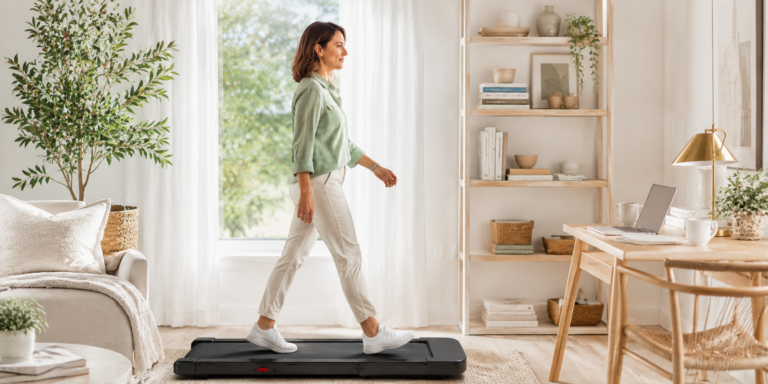
- Outside is ideal (daylight and fresh air are their own nervous system regulators), but indoors counts too.
- If 10 minutes feels like a lot to start, 5 minutes is not nothing. The habit matters more than the duration in the beginning.
To be honest, the biggest barrier I see is the mental one. We’ve been so conditioned to think movement only counts if it’s scheduled, sweaty, and tracked on an app. A gentle wander round the block after dinner doesn’t feel like health. But in perimenopause, this quiet consistency is exactly where the magic lives.
What to Expect When You Start
Give it two weeks, consistently, before you assess. Here’s what many women notice:
- More stable energy in the afternoons (fewer crashes that send you hunting biscuits)
- Better sleep quality, especially falling asleep more easily
- Reduced bloating after meals
- A subtle shift in mood, mostly because your blood sugar isn’t spiking and crashing quite so dramatically
- Over time, a gradual reduction in belly fat as cortisol lowers and insulin sensitivity improves
Is it a magic bullet? No. Nothing is, and I’d never tell you otherwise. But as one component of a hormone-supportive approach to midlife health, it’s one of the highest-return, lowest-effort things you can do. And that, right now, matters.
If you’ve been grinding away at workouts that are leaving you more exhausted than before, or avoiding exercise entirely because nothing seems to work anymore, I want you to know: your body is not broken. It’s just working with a completely different hormonal landscape. And once you start working with it instead of against it, things do shift.
Start with the walk. Seriously. Just the walk.
xx