
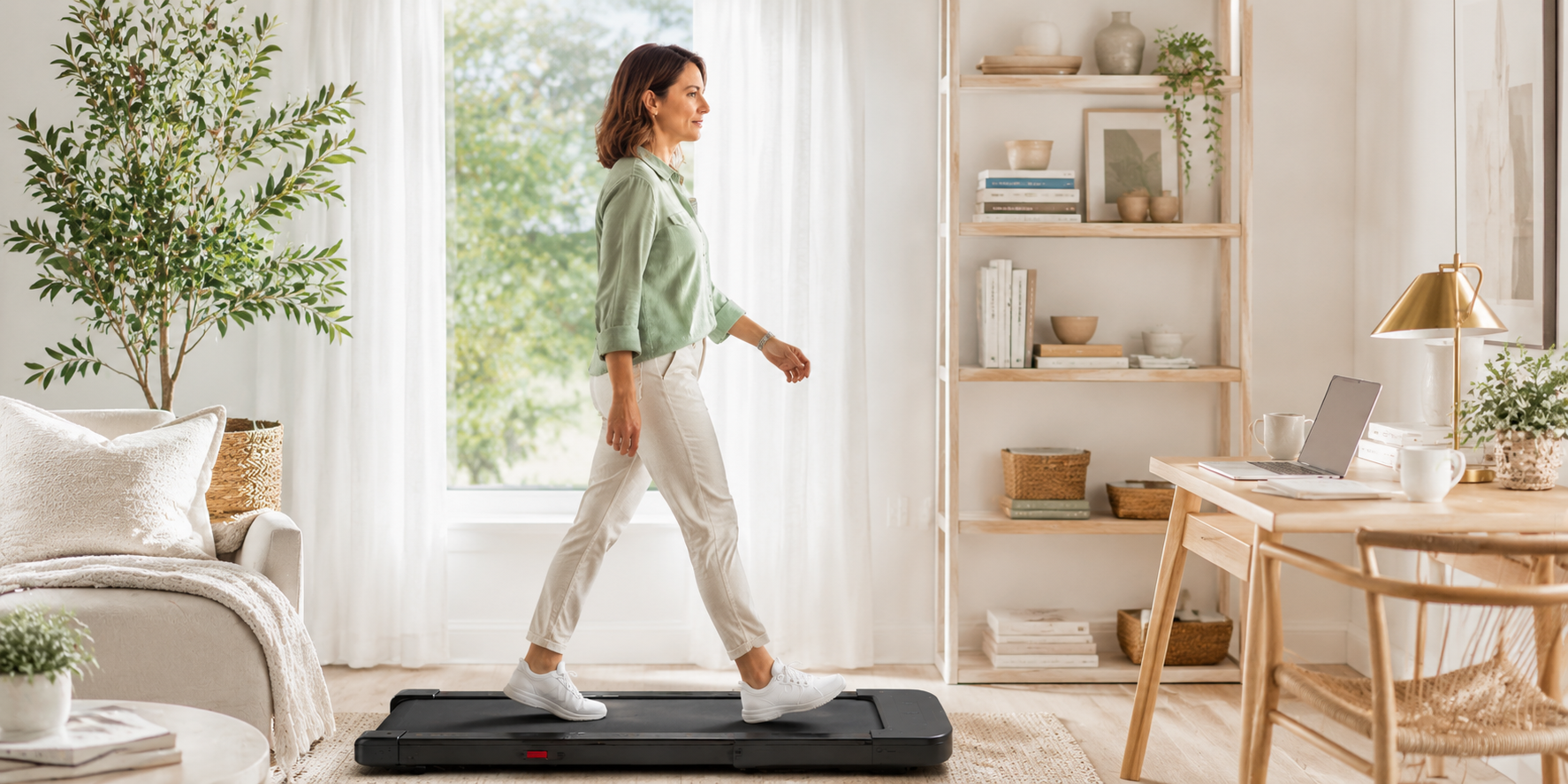
Best Walking Pads for Perimenopause
Right. So it’s 2pm on a Tuesday and I’ve been sitting at my laptop since 9am and the thought of going for an actual walk, outside, in proper clothes, with shoes on, is genuinely not happening.
But also I’m very aware that I’ve had lunch and I’m already feeling that post-meal slump that used to just be tiredness but I now know is my blood sugar doing something deeply unhelpful.
Enter: the walking pad.
I’m not saying it changed my life. But also… it kind of did? Let me explain and show you some of the best walking pads.
Wait, What Even Is a Walking Pad?
A walking pad is basically a flat, compact treadmill. No handlebars (usually, although you can find them). No big motor. Just a belt, some sensors, and the ability to walk slowly while you watch Netflix or pretend to listen in on a work call.
They fold flat or slide under a bed or sofa, which if you’ve ever had a full-size treadmill or exercise bike gather dust (and laundry) in the corner of a room, is genuinely exciting information.
They’re not for running. They’re not for intense cardio. They are perfect for slow, steady, low-effort movement that actually fits into a normal day.
Why Walking Pads Are Actually Great for Perimenopause
Can I nerd out for a second? I spent 20 years as a midwife and then perimenopause hit and I very quickly learned that everything I thought I knew about exercise needed rethinking.
High-intensity workouts? Were spiking my cortisol. Overtraining? Was making my sleep worse. Eating in a deficit and training hard? Wasn’t working the way it used to.
What did work? Walking. Specifically, slow, consistent, non-stressful walking. Multiple times a day if possible, and especially after meals.
The post-meal walk thing (this one’s a game-changer)
Isn’t it crazy how something as simple as a 10-minute walk after eating can completely change how your body handles blood sugar? Because it can. The research on this is solid. A short walk after a meal helps your muscles use glucose for energy before it has a chance to spike your insulin levels.
For women in perimenopause, blood sugar instability is one of the big drivers of symptoms: the afternoon crashes, the 3am wake-ups, the cravings, the moodiness, the weight that doesn’t shift no matter what you do. Getting blood sugar more stable can really make a difference to all of it.
But here’s the thing. You’re not always going to stroll outside after every meal. That’s not realistic. That’s where having a walking pad in your house is actually brilliant.
The 10 Minute Fix
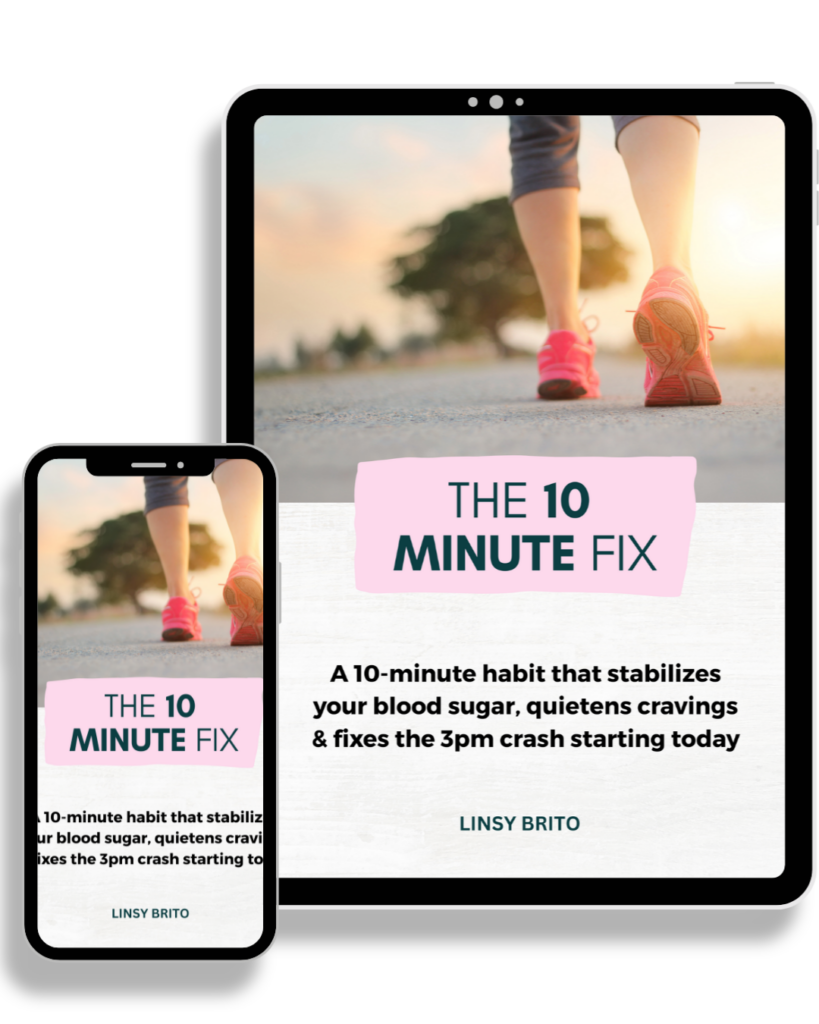
Want to know exactly how to use those 10 minutes to support your hormones, blood sugar, and energy? Grab my free walking guide – it’s short, practical, and actually doable.
What to Look For in a Walking Pad (Especially in Midlife)
Not all walking pads are equal and some of them are genuinely a waste of money. Here’s what I’d look for if you’re buying one:
- Speed range that goes slow enough. You want something that starts at 0.5-1 km/h. You’re not trying to break a sweat necessarily, you’re just moving.
- A decent weight limit. Check this. Many cheaper pads have lower limits than they advertise.
- Quiet motor. If you’re using it while working from home or while the kids are in the next room, this matters more than you think.
- Compact footprint. Most walking pads fold or slide away. Check the dimensions for your space.
- Remote control or app. Because reaching down to change speed mid-walk is annoying and slightly dangerous.
- Non-slip surface. Some cheaper belts can feel slippy when wearing socks. Just check the reviews.
The Best Walking Pads
To be honest, I’d encourage you to do your own research based on your budget and space, but these are the ones that come up consistently well reviewed for home use, and the ones I’ve tried or looked at properly.
For a Budget-Friendly Starting Point
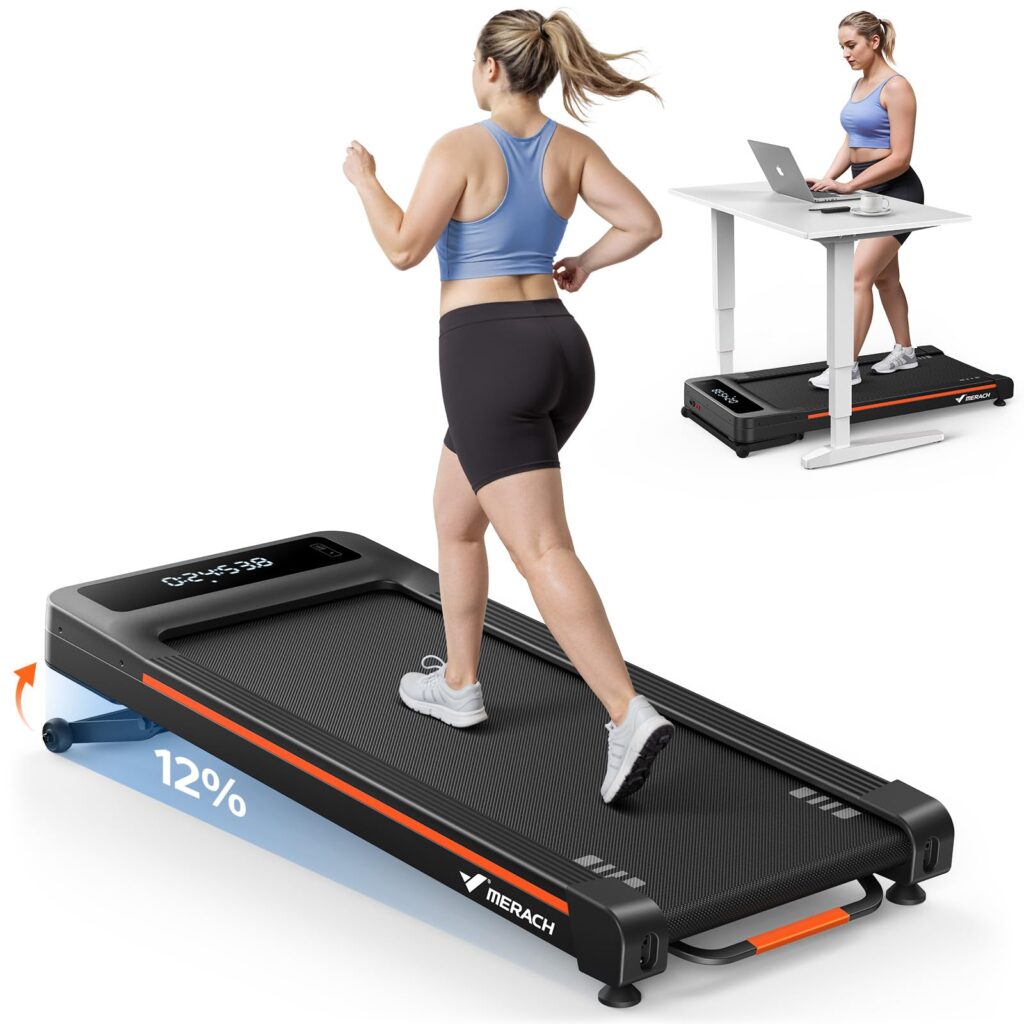
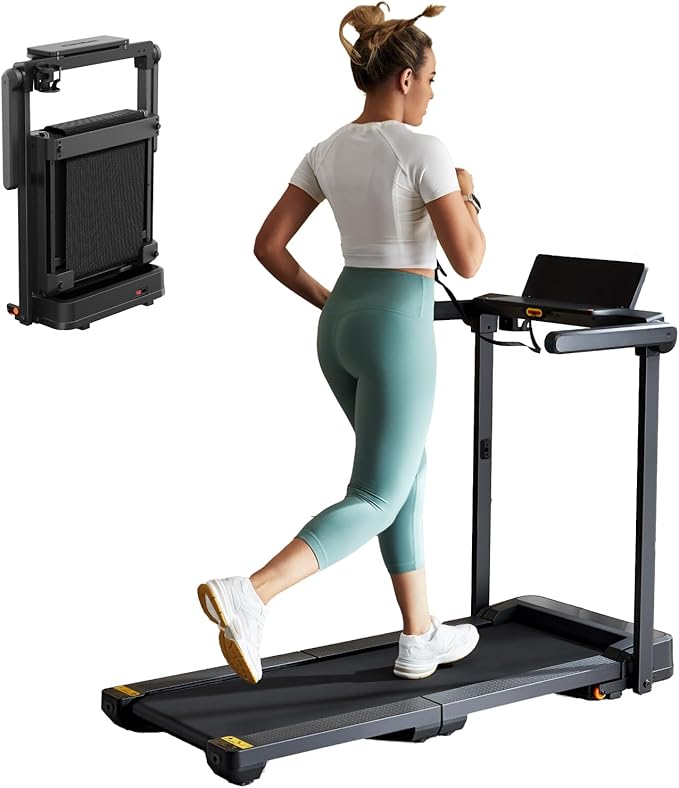
This no-frills walking pad is honestly a solid place to start if you just want to move more without a massive financial commitment or a treadmill taking over your living room. It weighs around 16kg, has built-in wheels, and the slim profile means it slides under a bed, sofa, or desk when you’re done. The walking surface is a decent size for daily use, and the 5-layer anti-slip belt with shock absorbers takes some of the impact off your knees and ankles, which matters more than you’d think when you’re on it for 20-30 minutes at a time. Zero assembly required as well. You literally open the box and start walking. No faff, no YouTube tutorials, no leftover screws on the floor.
For a Mid-Range Option That’ll Last
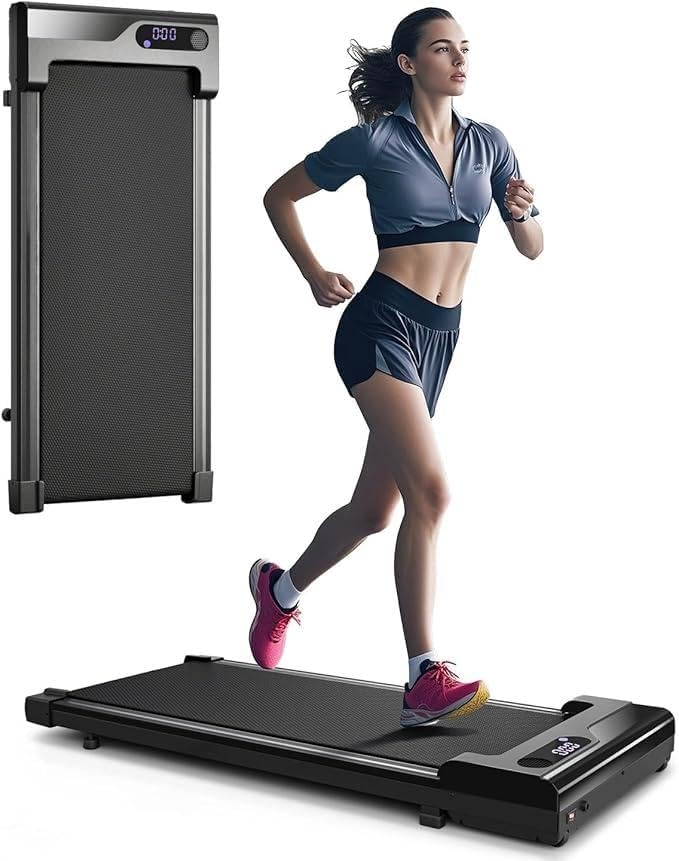
If the budget option feels a bit too basic, the MERACH W50 is the step-up that actually makes a difference. The 12% auto incline is the thing here, because walking on an incline burns significantly more calories than flat walking without adding any extra time or impact on your joints, and that’s exactly the kind of efficient, low-drama movement that works well in midlife. The motor runs at under 25dB (quieter than a whisper, to put it in context), so you can use it during calls or early in the morning without disturbing anyone. The build is noticeably sturdier than a typical folding pad, the walking surface is wide enough that your stride feels natural, and it connects to a free app if you want to track your progress. It still slides under furniture when you’re done. More machine, same storage footprint. Do you know what, that’s a win.
For an Under-Desk Situation
If you work from home at a desk and want to actually walk while you work (it’s a whole thing and yes, it takes some getting used to), something like the Urevo 2-in-1 or the Mobvoi TicMill works well under a standing desk. Quieter motor, slimmer profile. Not designed for speed but genuinely useful for low-and-slow movement during the working day.
| Affiliate disclaimer: Some links in this post are affiliate links, which means I may earn a small commission if you buy through them, at no extra cost to you. I only ever recommend things I’ve actually used or researched properly. xx |
How I Actually Use Mine
Do you know what, I will admit that when I first got it I had this vision of myself walking 10,000 steps before lunch and feeling very smug about it.
That did not happen.
What actually happened is I started using it for 10-15 minutes after lunch while scrolling or reading. Then occasionally while watching something in the evening. Sometimes I’ll hop on for a few minutes while I’m on a voice call that doesn’t need me to look at a screen.
It’s very low pressure and tha’s the point. The boring, sustainable version of exercise is the one that actually helps in perimenopause. Your body doesn’t need more stress. It needs consistent, gentle movement that doesn’t spike cortisol.
(I say this as someone who used to run and do HIIT and then perimenopause showed up and basically told me to calm down. Humbling. Truly.)
What About the Cost?
A decent walking pad runs £200-500 depending on the model. I know that’s not nothing. Here’s how I think about it though:
- It’s one piece of equipment that sits in a corner (or slides under the bed)
- No gym membership, no commute, no scheduling around anything
- You’ll actually use it, because it requires approximately zero effort to set up
- Post-meal walks can genuinely shift symptoms that would otherwise have you buying supplements or skipping social things because you feel awful
Is it essential? No. Is it one of the more useful things I own for supporting my health while living a normal, busy, abroad-based, family-juggling life? Yeah, honestly, it is.
A Few Practical Tips
- Start slow. Literally. Set it to 2-3 km/h and just get used to walking on it before trying to multitask.
- Wear trainers or bare feet. Slippy socks on a moving belt is an experience you don’t need.
- Put it somewhere visible. If it lives folded behind a door you’ll forget it exists.
- Use it after meals first. That’s where you’ll notice the biggest impact on energy and symptoms. Work up from there.
- Don’t try to walk and type at the same time immediately. Give yourself a week to find your balance.
The 10-Minute Fix is my free walking guide for midlife women. I covers when to walk, how long, what pace, and exactly why it works for hormones and blood sugar. It’s properly short and actually useful. And if you want to go deeper…
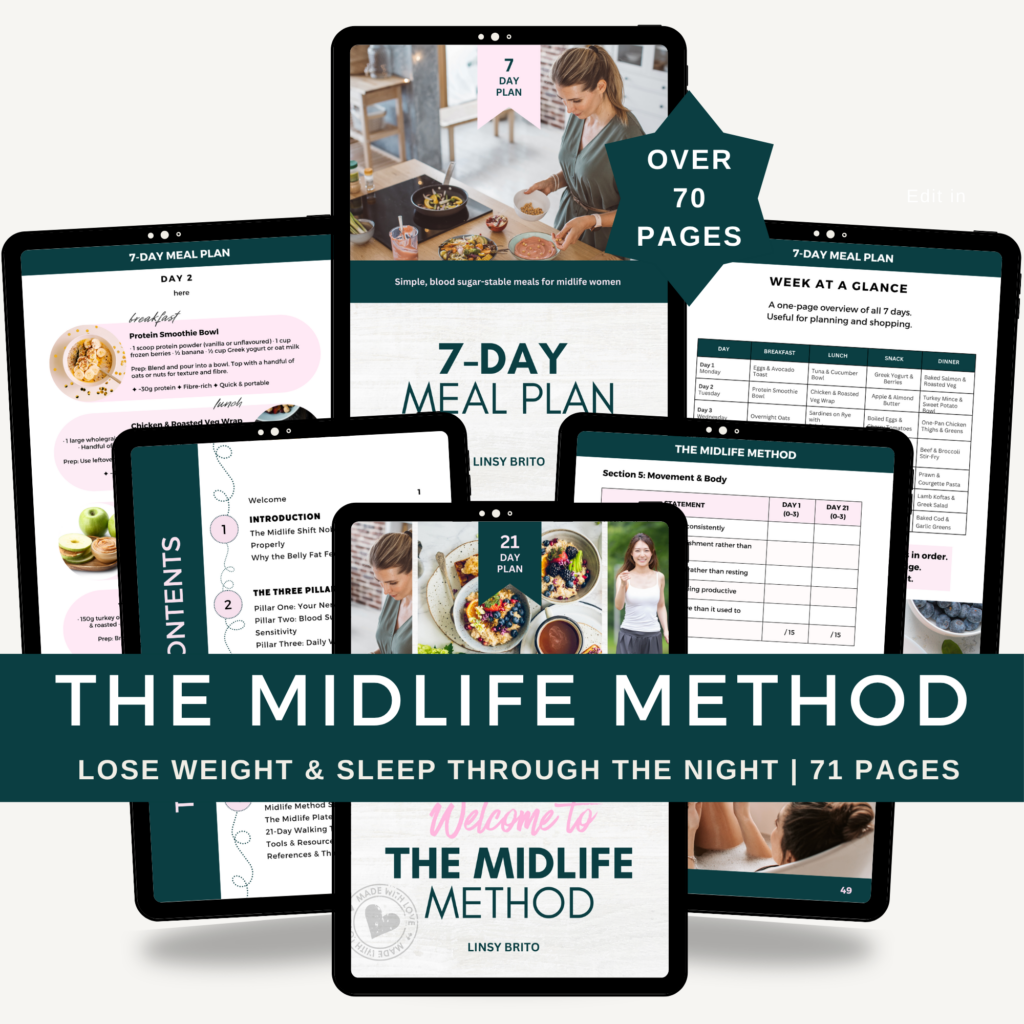
The Midlife Method
My 21-day programme covering nervous system regulation, blood sugar balance, and a full walking protocol built specifically for women in perimenopause. It’s the thing I wish had existed when everything started going sideways for me.
Final Thoughts
Look. I’m a health coach. I know all the things you’re supposed to do. I also have sarcoidosis, a family, a business, and a body that does not respond the way it did at 32. So when something is both useful and also easy to fit into a normal day, I’ll always tell you about it.
A walking pad isn’t a magic solution. But slow, consistent movement after meals, done regularly, in your own house, in your pyjamas if necessary? It adds up. It actually helps.
You don’t need to overhaul your life. You just need to move a little more, in ways that don’t stress your nervous system. This is one of those ways.
Start small. See how you feel. xx