The Perimenopause Breakfast Mistake That’s Wrecking Your Blood Sugar All Day
So… I need to talk to you about breakfast.
Specifically, the perimenopause breakfast mistake that you are making every single morning, thinking it’s one of the healthier choices they make all day. The one that’s on every wellness account. The one that genuinely feels virtuous.
The oatmeal and fruit situation. I’m so sorry.
I know. It feels like I’m about to ruin something good for you. But stay with me, because once I explain what’s actually happening in your body before 9am, you’ll understand why you’re fighting cravings all day, why your energy crashes by 2pm, and why that 9pm hunger feels completely out of your control.
I made this exact perimenopause breakfast mistake myself for years. Even when I was living abroad and eating what felt like a genuinely balanced, fresh diet, I was still starting every day with something that was quietly tanking my blood sugar before I’d even got the kids out the door.
It is not a willpower problem. It is a blood sugar problem. And it starts at breakfast.
What’s Actually Happening When You Eat That Breakfast
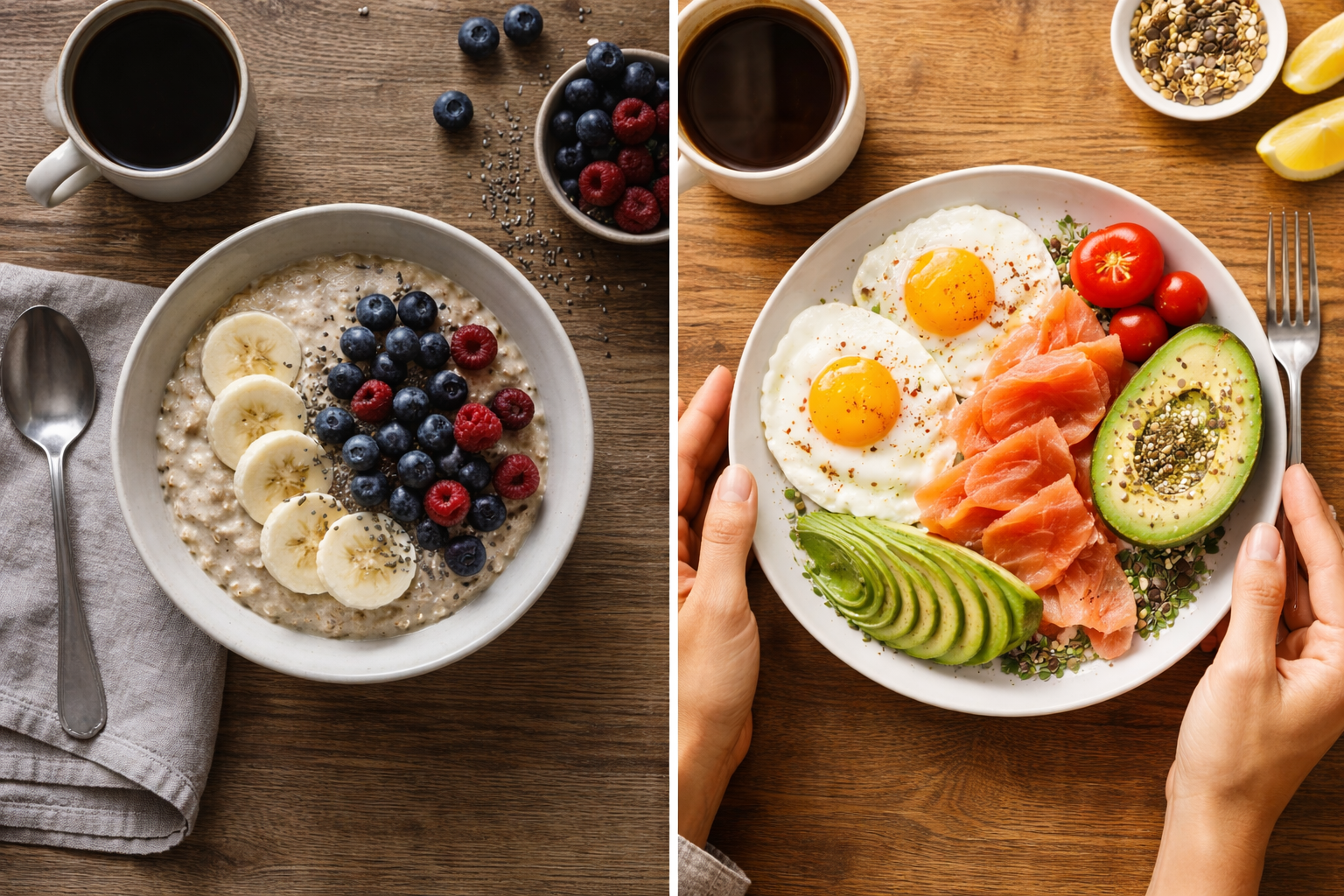
Here’s the thing about oats and fruit. They’re not bad foods. But in perimenopause, eaten on their own first thing in the morning, they create a blood sugar spike that your body then has to manage for the rest of the day.
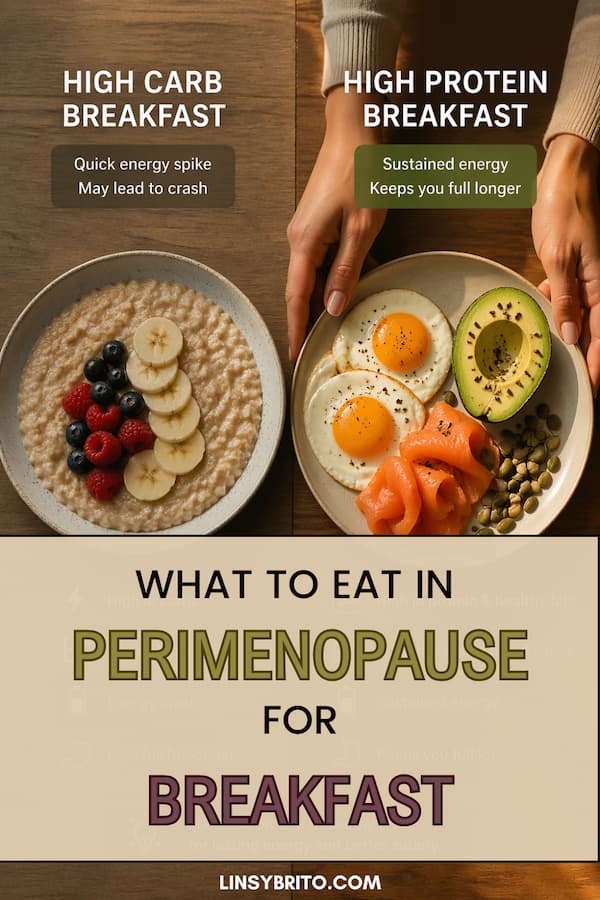
Without enough protein and fat to slow down digestion, the natural sugars in fruit and the carbohydrates in oats hit your bloodstream quickly. Your body releases insulin to deal with it. Blood sugar spikes, then crashes. And that crash is what triggers the cravings, the brain fog, the mid-morning hunger, and the 3pm slump you’ve been quietly blaming yourself for.
| Isn’t it mad how…You can eat a ‘healthy’ breakfast at 7am and feel ravenous by 10am, and genuinely wonder what’s wrong with you. Nothing is wrong with you. Your blood sugar just went on a rollercoaster before you even got to work. Or before you sorted the school run, or sent your first email, or did whatever your morning chaos looks like. |
In perimenopause this matters even more. Falling oestrogen affects insulin sensitivity, which means your body is already less efficient at managing blood sugar than it used to be. Add a high-carb, low-protein breakfast on top of that and you’re starting every single day at a disadvantage.
Pin it for later ⤵️
Why This Keeps Your Body in Fat-Storage Mode
Every time your blood sugar crashes, your body interprets it as a stress event. Cortisol (your stress hormone) spikes in response. And as I talked about in my last post, elevated cortisol tells your body to hold onto fat, particularly around your belly.
So the whole cascade looks like this:
- High-carb, low-protein breakfast → blood sugar spike
- Blood sugar crashes → cortisol spikes
- Cortisol tells your body to store fat → belly fat stays put
- Cravings kick in → you eat something to compensate → blood sugar spikes again
- Repeat. All day. Every day.
To be honest, when I figured this out for myself I was genuinely frustrated. Not at anyone in particular, just at the fact that nobody had explained the mechanism clearly. We get told what to eat but rarely why certain foods work differently for women in perimenopause specifically.
Your body isn’t the same as it was at 32. And your breakfast shouldn’t be either.
The 4 Perimenopause Breakfast Habits Worth Reconsidering
1. Oatmeal with fruit and no protein
As we just covered, this spikes blood sugar fast without anything to slow it down. If you love your oats, they’re not off the table. But they need protein alongside them. A couple of eggs, some Greek yoghurt, a handful of nuts. The protein and fat completely changes the blood sugar response.
2. A smoothie made mostly of fruit
Liquid food digests faster than solid food, which means an even quicker blood sugar hit. Most smoothies, even the green ones, are predominantly fruit sugar. If you’re blending, the ratio matters more than the colour. Think more protein and fat (Greek yoghurt, nut butter, seeds) and less fruit.
3. Skipping breakfast entirely
I know intermittent fasting is still everywhere. And for some people, at some stages of life, it works. But in perimenopause, especially if your cortisol is already elevated, skipping breakfast can spike cortisol further as your body goes looking for fuel. That sets up a stress response before the day has even started. Not ideal.
4. Toast with something sweet
Not an evil food. But bread and jam, or honey on toast, without protein is just another fast-release carbohydrate that leaves you hungry within two hours. Your blood sugar genuinely does not care that it was sourdough.
What the Midlife Plate Looks Like at Breakfast
The framework I use (and that I’ve built into my free Midlife Plate guide) is really simple. Every meal, including breakfast, should have:
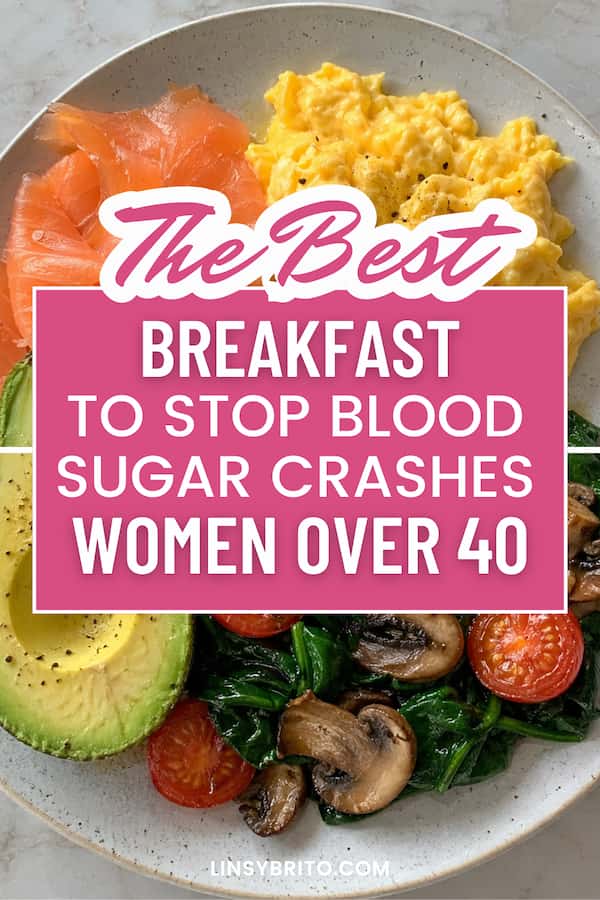
- Protein first. This is the anchor. Eggs, Greek yoghurt, cottage cheese, smoked salmon, leftover chicken, whatever works for your life. Aim for at least 25 to 30g of protein at breakfast.
- Healthy fat. Avocado, nuts, seeds, olive oil. Fat slows digestion and keeps blood sugar stable.
- Fibre. Vegetables, seeds, or a small amount of complex carbohydrate. This slows glucose absorption.
- Carbohydrates last, and less of them. Not zero. Just not the star of the show.
Do you know what happened when I switched my breakfast in perimenopause? The 10am hunger disappeared. The afternoon crash got noticeably better within about five days. The cravings that hit every evening became manageable rather than overwhelming.
I changed nothing else that week. Just breakfast. One thing, to see what it actually did. That’s me, I like to test things properly rather than changing everything at once and not knowing what worked 😂
Before & After: The Midlife Breakfast Swap
| ❌ Blood sugar spike | ✅ Midlife Plate |
| Oatmeal + banana + honey | Eggs + smoked salmon + half an avocado |
| Fruit smoothie (mostly mango + berries) | Greek yoghurt + seeds + small handful of berries |
| Toast + jam | Sourdough + eggs + wilted spinach |
| Granola + oat milk | Full-fat Greek yoghurt + nuts + a few berries |
| Nothing (skipping breakfast) | Protein-first breakfast within 90 mins of waking |
A Quick Note on Not Being Perfect About This
I’m not saying you can never have a bowl of porridge again. I promise I’m not that person and this is not that kind of blog.
What I am saying is that if you’re eating the same breakfast you ate at 35 and wondering why your body isn’t responding the same way, this is probably worth looking at. One change. Just breakfast. See what a week feels like.
The Midlife Plate isn’t a diet. It’s a framework for building meals that actually work for where your body is right now. And breakfast is the most powerful place to start, because it sets your blood sugar (and your cortisol) up for the entire day.
| If you’re doing everything right and still struggling with energy, cravings and belly fat then you need The Blood Sugar Fix. A simple, no-overwhelm way to steady your blood sugar so your energy, cravings, and mood stop running the sho |

The Bottom Line
Your breakfast is either setting you up or setting you back. In perimenopause, with blood sugar regulation already harder than it used to be, this matters more than it ever has.
You’re not failing at healthy eating. You’re just working with the wrong information. And now you’ve got better information.
Start with breakfast. See what changes. I think you’ll surprise yourself.
Pin it for later ⤵️